Solemnity of St. Joseph is March 19th. You can take a break from your Lenten Fasts and enjoy a Feast Day to celebrate St. Joseph! The month of March is dedicated to St. Joseph, most chaste spouse of the Blessed Virgin Mary, foster father to Jesus, and head of the Holy Family.
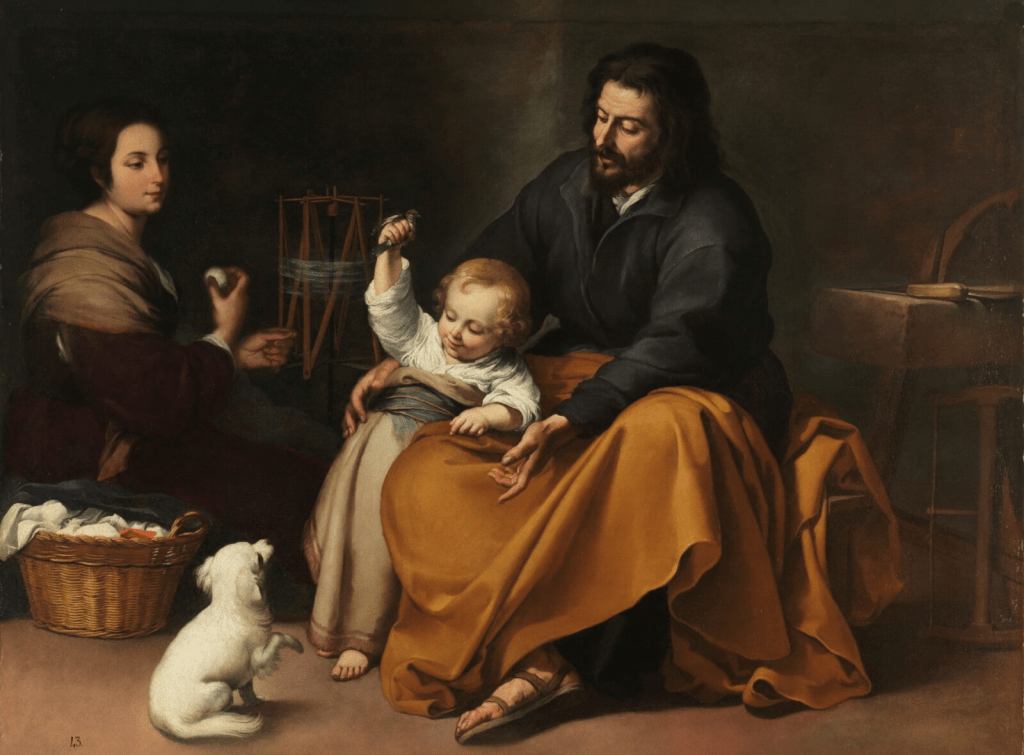
Here’s a talk about three things we can learn from the life of St. Joseph: St. Joseph’s Side of the Story
An effective means of obtaining special graces through the intercession of St. Joseph is to honor his seven sorrows and seven joys by the practicing the Seven Sundays devotion. St. Joseph’s Seven Sorrows and Seven Joys Devotion & the Seven Sundays Devotion. This devotion may be practiced at any time of the year, but especially on the seven Sundays preceding his solemnity on March 19th. The prayers for this devotion can be found at https://www.catholictradition.org/Joseph/joseph9.htm
| JOSEPH’S SEVEN SORROWS | JOSEPH’S SEVEN JOYS |
| 1. The doubt of St. Joseph (Matt. 1:19) | 1. The message of the Angel (Matt. 1:20) |
| 2. The poverty of Jesus’ birth (Luke 2:7) | 2. The birth of the Savior (Luke 2:10-11) |
| 3. The Circumcision (Luke 2:21) | 3. The Holy Name of Jesus (Matt. 1:25) |
| 4. The prophecy of Simeon (Luke 2:34) | 4. The effects of the Redemption (Luke 2:38) |
| 5. The flight into Egypt (Matt. 2:14) | 5. The overthrow of the idols of Egypt (Is. 19:1) |
| 6. The return from Egypt (Matt. 2:22) | 6. Life with Jesus and Mary at Nazareth (Luke 2:39) |
| 7. The loss of the Child Jesus (Luke 2:45) | 7. The finding of the Child Jesus in the Temple (Luke 2:46) |
Saint Joseph wasn’t one to draw attention to himself he was a humble and silent servant of God. Like many fathers I rather think he prefers to go about doing the work that needs to be done without concern for recognition. It is no wonder that St. Joseph is the patron saint of many aspects of life. He is the patron saint of the Universal Church, fathers, unborn children, travelers, immigrants, families, day laborers, workmen, and a happy death.
Why are lilies always associated with St. Joseph? The biblical passage, “The just man shall blossom like the lily” is applied to St. Joseph and ancient legend tells that he was chosen from among other men by the blossoming of his staff like a lily. The lily symbolizes integrity and a white lily symbolizes purity. St. Joseph is frequently shown holding three lilies to represent the Holy Trinity. With these connections the lily has become a plant to be associated with St. Joseph. When you see the hearts of the Holy Family, St. Joseph’s heart depicts his Most Chaste Heart inflamed with love and adorned with the white lily of purity.
St. Joseph was a great man with a “most chaste heart” and a man of little words. There are no words from St. Joseph’s mouth in the Bible. He was a silent strength off to the side. Always near, but never the feature, St. Joseph led a life of duty and honor. His quiet introspection is a source of guidance to us. In his quiet hours is when he heard God’s messages most clear. Angels sent to carry messages from God were heard and his obedience in following these commands is a great example for us.
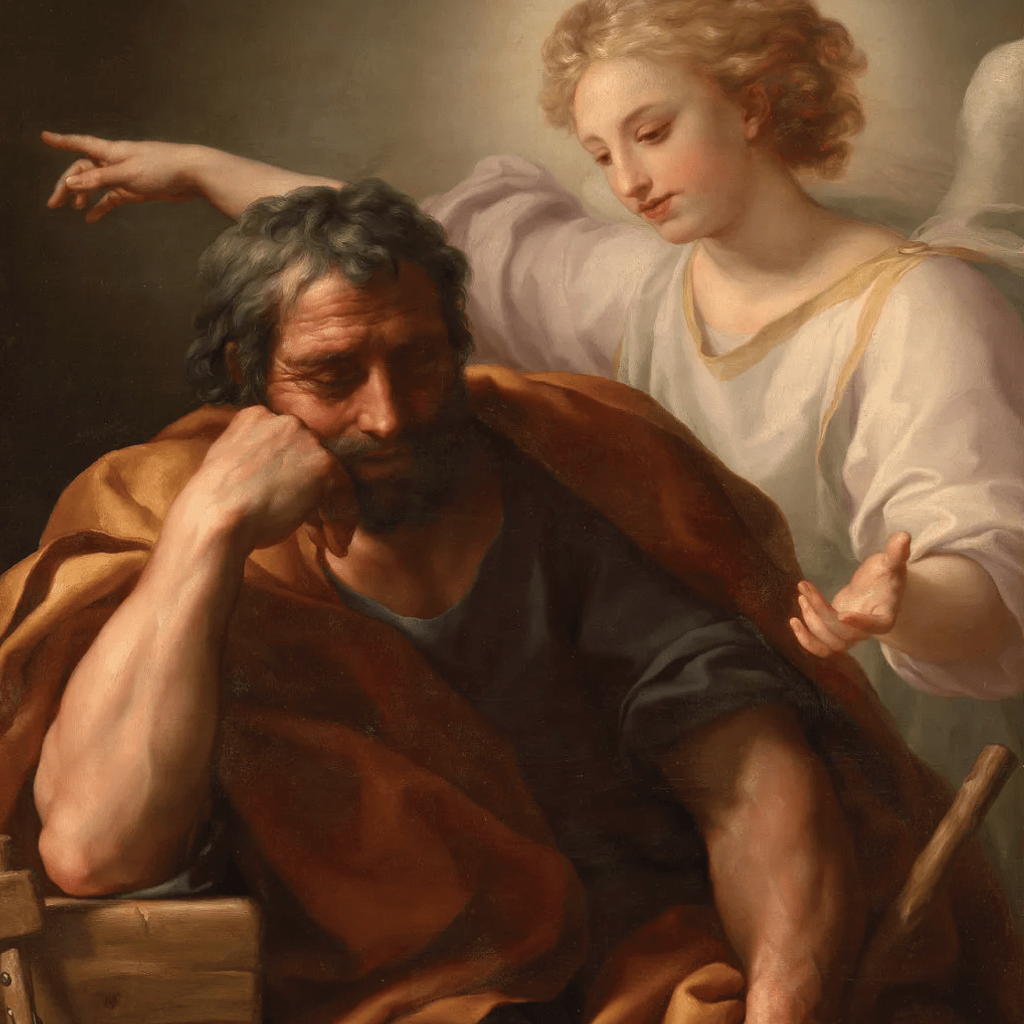
There is an interesting article about St. Joseph and his quiet nature. Silence is Golden is the perfect connection to prayer during Lent. This talk by John Kinuthia Looking Closer at Joseph This Advent is a very good mini-retreat. Even with it being an Advent 2019 presentation his words are beautiful for Lent too. John Kinuthia discusses St. Jospeh’s ability to quiet his mind and heart to listen to God’s voice. St. Jospeh’s ability to find daily silence made room for God. A beautiful example and message for us to follow every day and especially during Lent.
St. Joseph’s day is a celebration of Fathers and Faith. For the Italians St. Joseph is a really big deal. There is a beautiful Sicilian-Italian tradition to honor St. Joseph with a “St. Joseph’s Table” . Through his intercession the people were saved from starvation due to a prolonged drought. So they honor him with a bountiful feast. Sicilian-Italian immigrants brought this tradition to America where we can see these amazing St. Joseph’s Tables on display. You can make your own at home or look to see if you can visit a St. Joseph’s Table in your community. Many Italian community groups (community centers), Italian businesses, local churches, colleges or museums often sponsor an event honoring St. Joseph’s Day. The DiCamillo Bakery in Western New York has a webpage showing all of the interesting specialized St. Joseph’s Day breads they prepare. Little Italy in Baltimore has events too.
What’s a feast without the food? Here are some ways to enjoy foods associated with St. Joseph’s Day.
- A wood cake with saw
- St. Joseph’s Day cookies
- St. Joseph’s Day soup
- St. Joseph’s cream puffs
- St. Joseph’s Day pasta
Katherine Bogner of Look to Him and be Radiant has some coloring pages: Pure heart of St. Joseph, the St. Joseph Novena where you can color the lilies to mark off the days of prayers. Here are some ways to bring a lily in to your home.
- Bring home an Easter lily for St. Joseph’s day
- Print a paper lily
- Make a St. Jospeh’s Lily from a paper plate
- Make a St. Jospeh’s Lily from paper handprints
- Lily paper art
- Craft an elegant paper lily
The Holy Mother Church has given *Wednesday to St. Joseph. This means that the middle of the week is another time to reflect on, be grateful for, and intercede on behalf of holy fatherhood, both spiritual and biological.
*The other days are as follows: Sundays honor Jesus’ Resurrection, Mondays for the Holy Spirit and the holy souls in Purgatory, Tuesdays for the Holy Angels, Thursdays are devoted to the Blessed Sacrament and Holy Priesthood, Fridays are dedicated to Christ’s Passion and His Sacred Heart, and Saturdays honor the Blessed Virgin Mary because on Holy Saturday She waited in joyful hope for the Resurrection of Jesus from the dead.
 The Small Pencil Catechist